
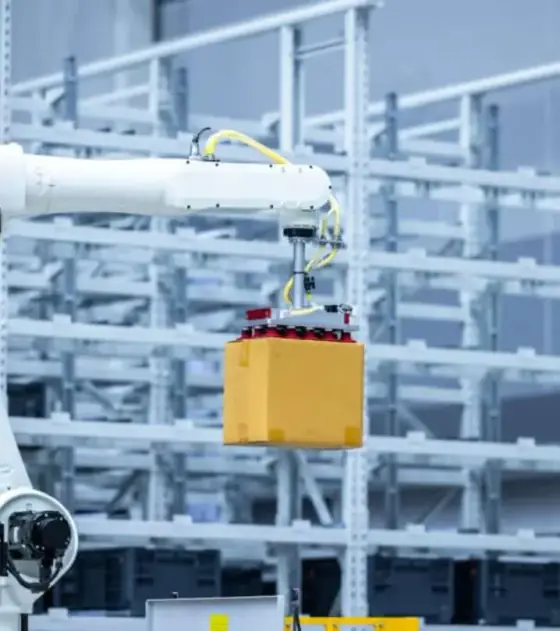
From an AI decision to a physical movement
Machine vision, adaptive inspection and AI-assisted production can create requirements for positioning, handling or adjustment. The component enquiry starts with the movement: what moves, how far, how often and under which conditions. AI describes part of the control architecture; it does not establish the force, torque, accuracy or duty of the physical axis.
Our UK engineering team helps source the components around that movement. Enquire about the original product, alternatives or a package of motors, gearing, feedback, drives and controllers. Pricing, supply arrangements and support are confirmed for the specific project.
Applications that create motion enquiries
Useful examples include camera positioning in inspection cells, sample handling in automated laboratories, adjustment of production tooling, robotic loading and mobile-platform handling mechanisms. These are application categories, not customer case studies or claims about completed installations.
| Application requirement | Components to discuss |
|---|---|
| Position a camera or instrument | Motor, feedback and the mechanical positioning arrangement |
| Move or lift a load | Actuator or axis with the required operating duty |
| Coordinate several movements | Drives, controller and defined interfaces |
| Pass data or power through rotation | Slip ring or rotary data connection suitable for the signals |
| Adjust a physical process | Actuator, sensing and agreed local control behaviour |
Keep the interfaces explicit
Document what the supervisory system sends and what the machine controller accepts. Agree who owns motion planning, position feedback, fault handling and commissioning. A fieldbus name alone does not prove compatibility between an AI computer, controller and drive. Confirm the actual hardware, firmware and supported functions.
Separate development targets from product features
A supplier may publish an analytics roadmap or describe a future connected platform. Ask which functions are released for the proposed order code and which require development, additional hardware or another service. Product selection should rely on the functions available for your project, not an assumed future capability.
Physical AI and embodied robotics
The phrase physical AI is often used for systems that turn sensed information into actions in the real world. For a component enquiry, describe the actual movement and the interfaces that connect it to the supervisory system. Specify Motion helps source the hardware for that requirement; an AI label is not a complete machine specification.
Prepare a useful engineering and sourcing enquiry
Provide the mechanism, load, travel, speed, duty, environment and available space. Add the existing controller and supply, the prototype and production quantities and the target delivery date. If a complete bill of materials is not yet available, the configurator lets you record the known requirements and leave the rest for discussion.
For an installed machine, identify what stays and what can change. Replacing a motor may affect the drive and feedback; changing an actuator may affect the mechanical interface and the control sequence. Ask for those dependencies to be identified in the proposal.
Source the complete motion requirement
Explore complete motion axes, check motor-drive compatibility and browse controllers. Send your application for pricing and sourcing or use the full configurator. We can help define the parts, documents and supply support needed to take an enquiry towards an order.